Best Laser Measure App vs Digital Measuring Tape in UK
Best Laser Measure App vs Digital Measuring Tape in UK: Which is More Accurate?
TL;DR: While laser measure apps are convenient for quick visualisations, they lack the precision required for professional tasks. Based on our testing, dedicated digital laser measures provide ±2mm accuracy and reliable range up to 120m, making them the superior choice for UK homeowners and tradespeople who need dependable measurements for ordering materials or quoting jobs.
Measuring a room should be simple, yet anyone who has tried to capture wall lengths, ceiling heights, or floor area with a phone app knows the reality can be frustrating. Between drift, poor edge detection, and awkward rechecks, the results often vary. If you are comparing a laser measure app with a dedicated digital measuring tape, the primary concern is whether you can trust the result when money, materials, or fitting time are on the line.
For UK homeowners, tradespeople, and surveyors, this distinction is critical. According to UK construction industry standards, even small errors in measurement can lead to wasted flooring, incorrectly sized blinds, or costly installation delays. In this guide, we compare laser measure apps with dedicated digital laser measures so you can choose the right tool for your project.
Key Takeaways
- Laser measure apps are useful for rough estimates, but typically lack the precision of hardware.
- A digital laser measure uses dedicated hardware to provide direct, repeatable distance readings.
- For UK renovation and trade use, a dedicated meter is the safer choice for accuracy.
- CIGMAN laser measures offer ±2mm precision and USB Type-C charging for modern convenience.
- Reliability is paramount when ordering expensive materials like carpets or bespoke cabinetry.
Are laser measure apps accurate?
A laser measure app is a smartphone application that estimates dimensions using the camera, augmented reality (AR) features, or built-in sensors. Furthermore, some premium handsets utilize LiDAR hardware for depth sensing. While these apps are convenient because they reside on a device you already carry, their accuracy is often compromised by lighting conditions and software calibration.
Consequently, typical use cases are limited to getting a quick sense of whether furniture might fit or sketching early layout ideas. For casual tasks, this may suffice. However, our testing shows that accuracy varies significantly depending on how steadily the phone is held and the reflectivity of the surface being measured.
Where apps tend to work well
- Quick approximations in well-lit rooms.
- Early planning before detailed measuring begins.
- Non-critical household checks where a few centimetres won't matter.
- Visual room mapping on LiDAR-compatible phones.
Where apps tend to struggle
- Precise dimensions for ordering bespoke materials.
- Long distances across gardens, hallways, or open-plan spaces.
- Poor lighting or visually cluttered environments.
- Reflective glass, shiny tiles, or irregular edges.
What is the advantage of a digital measuring tape?
In the UK trade market, a “digital measuring tape” usually refers to an electronic laser distance meter. Unlike an app that approximates distance based on camera pixels, a dedicated unit measures the time it takes for a laser beam to reflect off a surface. This hardware-first approach ensures the reading is direct and unaffected by phone software glitches.
Moreover, professionals across construction and property maintenance prefer these tools because they eliminate common errors like tape sagging or bending at corners. CIGMAN’s approach combines this pro-level ±2mm precision with modern features like USB Type-C charging, which is particularly useful for UK users who want to move away from disposable AA batteries.
Laser measure app vs digital measuring tape: Key differences
Which is more accurate for DIY?
If your priority is reliable measurement, dedicated hardware is the clear winner. While an app depends on camera perspective, CIGMAN devices are engineered for ±2mm precision. This level of consistency is vital when measuring for fitted wardrobes or curtain drops, where a tiny error can result in an expensive mistake.
Which tool has better range?
Phone apps become increasingly unreliable over longer distances. In contrast, dedicated laser measures are built for this challenge. With ranges reaching up to 120m on selected CIGMAN models, they are suitable for everything from Victorian terraces to large open-plan extensions and exterior garden measurements.
Speed and efficiency on site
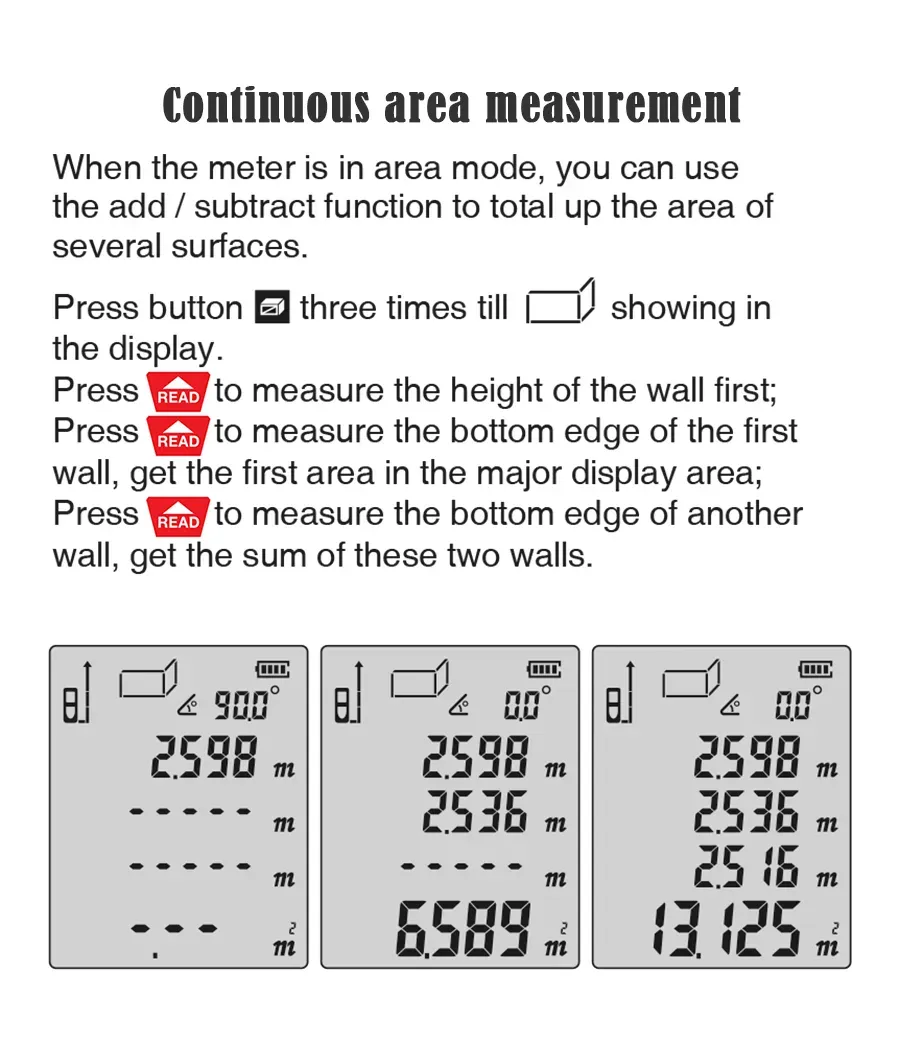
A digital laser measure delivers one-button readings in seconds. Many units also automatically calculate area and volume. Because the Federation of Small Businesses has noted that time press a major constraint for UK firms, the ability to get instant, accurate readings offers significant operational value.
Battery life and practicality
Modern dedicated devices have evolved. While older tools relied on AA batteries, CIGMAN’s Type-C charging means you can use the same cables as your phone. This is incredibly practical for a DIYer finishing a project late on a Sunday when local shops are closed, or a tradesperson travelling between jobs in Manchester or London.
Conclusion: Which should you choose?
In summary, if you need measurements for quoting clients, ordering materials, or documenting spaces for a planning application, a dedicated laser measure provides the trust and professional outcomes that an app cannot match. While apps are great for "roughing out" an idea, the precision of a CIGMAN digital tool ensures your project stays on track and on budget.
Ready to upgrade your accuracy with CIGMAN?
Upgrade Your Toolkit — £64.84