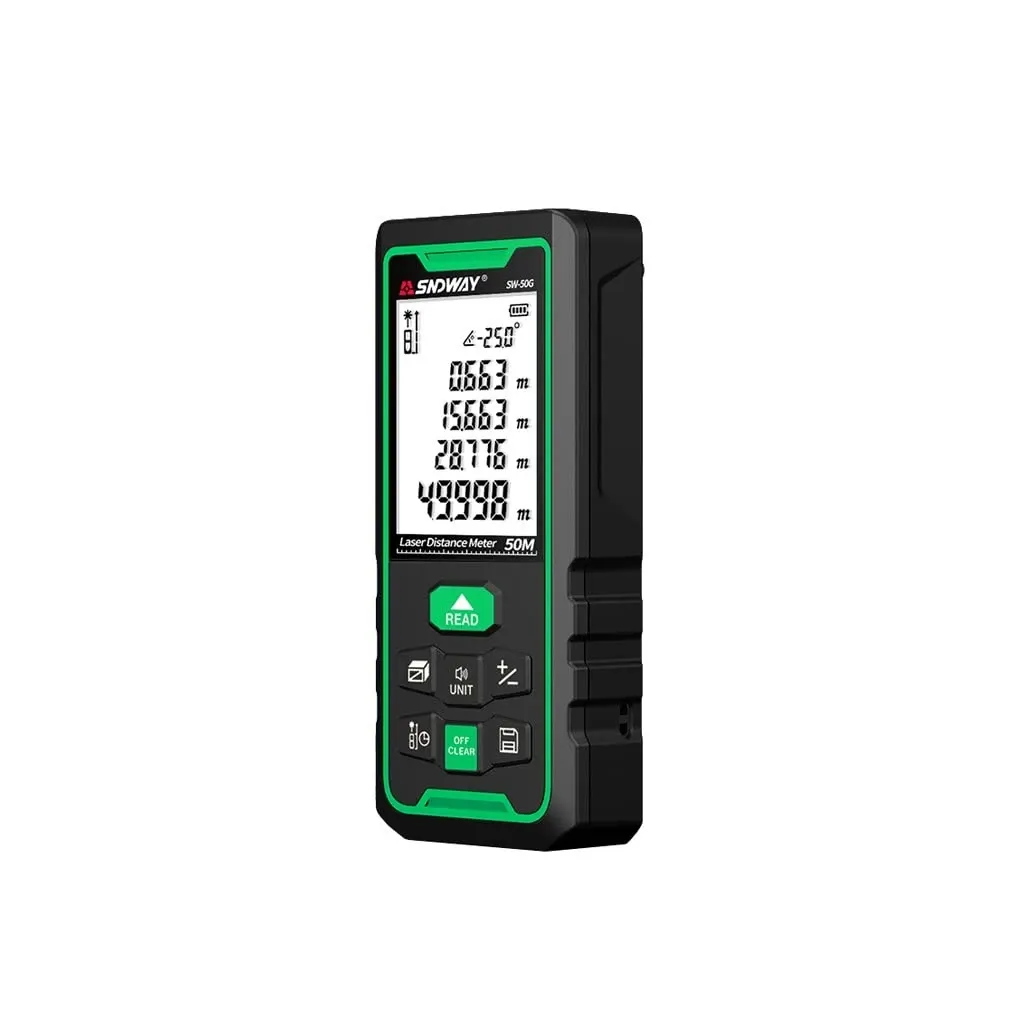
Laser Distance Sensor: How It Works and How to Choose
Everything you need to know about how a laser distance sensor works and how to choose one — from maker-grade modules to professional 120m handheld meters with ±2mm accuracy for warehouse-scale measuring.
What Is a Laser Distance Sensor?
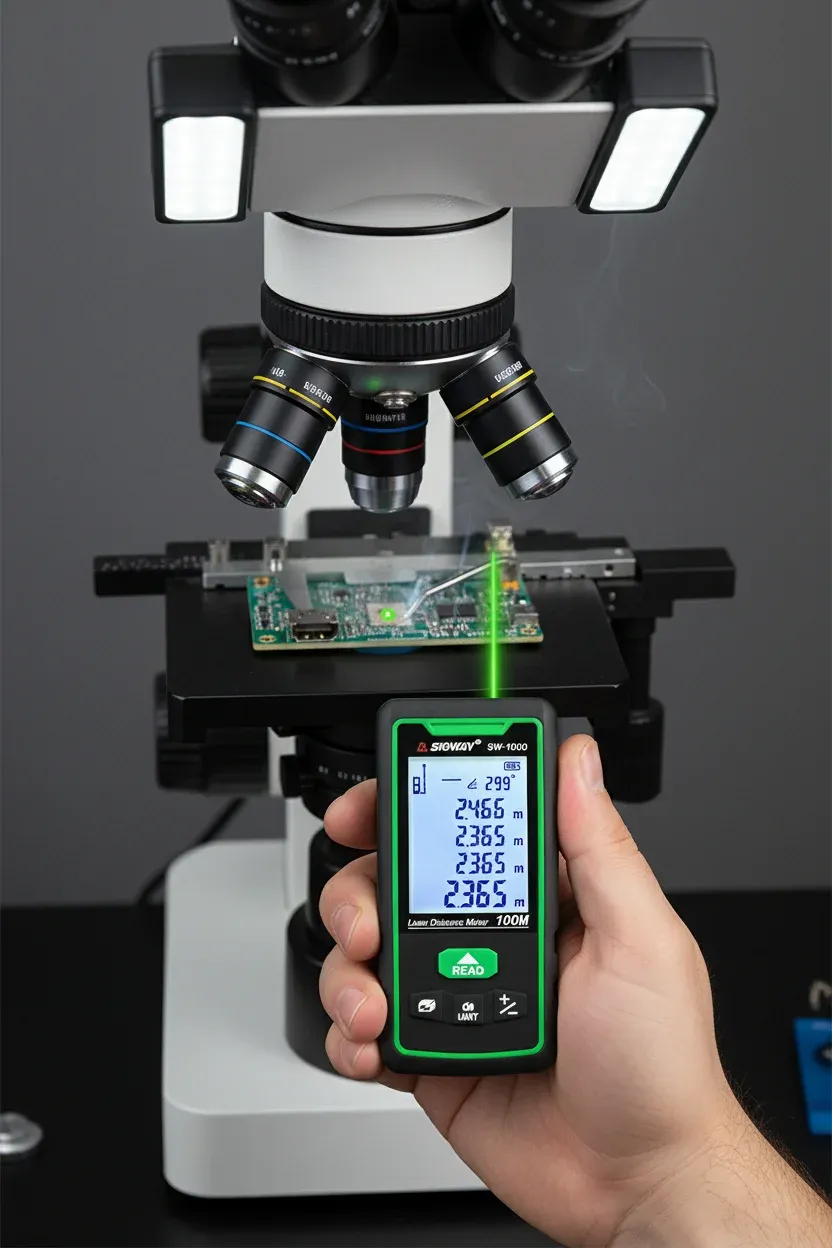
A laser distance sensor is an electronic instrument used to measure length or distance by emitting a focused beam of light and calculating the time it takes to return. Simple as that. These devices have largely replaced tape measures on professional job sites across the UK — and in warehouses and commercial buildings, where a 30-metre racking aisle or a clear-height check makes a tape genuinely impractical for one person.
Not all laser measurers are built equal, though: cheap units drift, dim displays disappear in low light, and the wrong form factor ends up in a drawer.
The technology sits in two broad camps. Handheld laser distance meters are what most tradespeople think of — point, click, read. Then there are sensor modules designed for integration into automated systems, robotics, or Arduino-based projects. Both use the same core physics, but the packaging and price points differ massively.
How Laser Distance Measurement Works
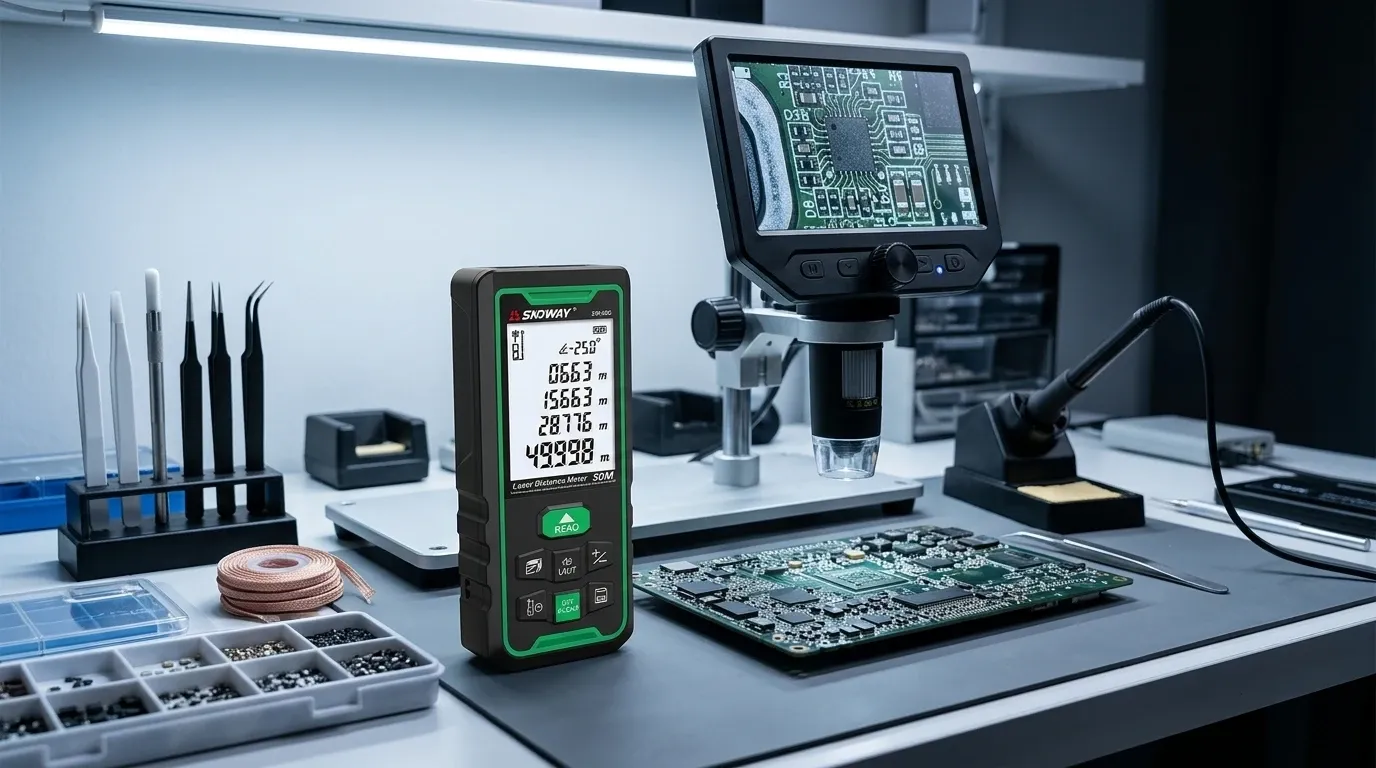
The principle is straightforward — a laser diode fires a pulse of light at a target surface, and the sensor calculates distance based on the return signal.
Time-of-Flight (ToF) Sensors
Most professional-grade devices use time-of-flight measurement. The sensor times how long the laser pulse takes to bounce back. Light travels at roughly 299,792 km/s, so the electronics need to be incredibly precise — we're talking picosecond-level timing circuits. That's why decent units cost more than a tenner.
Phase-Shift Method
Higher-end distance sensors use phase-shift detection instead. The device compares the phase of the outgoing and returning modulated beam. This method delivers better accuracy at longer ranges — typically ±1.5mm at 100m versus ±3mm for basic ToF units.
Triangulation Sensors
For short-range applications (under 1 metre), triangulation-based sensors work brilliantly. These are what you'll find in most Arduino-compatible modules. They project the beam at an angle and use a position-sensitive detector to calculate distance geometrically. Accuracy can reach ±0.1mm, but only within limited ranges.
So what's the catch? Reflective surfaces, extreme angles, and bright sunlight can all affect readings. That's why professional units include features like digital target plates and optical viewfinders for outdoor work.
Choosing the Right Distance Laser for Your Needs
Picking the best laser distance measurer depends entirely on what you're actually doing with it. A kitchen fitter doesn't need the same spec as a facilities manager mapping a distribution warehouse.
Range Requirements
Be honest about your actual working distances. Most interior work sits under 50 metres. If you're measuring rooms, a 40m unit is plenty. But for warehouse bays, racking runs, yard depths or large commercial floors, 120m gives you proper headroom — a full aisle or a wall-to-wall bay in one shot, from where you stand. The price difference from 60m to 120m models is often small, so the headroom rarely costs much.
Accuracy Class
For general building and facilities work, ±2mm accuracy is spot on. That's what you'll get from units like the CIGMAN 120m laser distance meter at £79.99. Specialist surveying applications might demand ±1mm or better, pushing you into premium territory with brands like Leica at several times the price.
Features That Actually Matter
Forget the marketing fluff. Here's what makes a real difference day-to-day:
- Backlit LCD display — essential for dimly lit warehouses, plant rooms and sites
- Multiple measurement modes — area, volume, Pythagoras calculations save time
- Type-C charging — no more hunting for AAA batteries at 7am
- Sensible build quality — dust and knocks are inevitable in stores and on sites
- Electronic angle sensor — for indirect height measurements
Some buyers just grab whatever's cheapest online. That's fine for occasional DIY. But if space data feeds racking layouts, lease particulars or management reports, a dependable unit around the £80 mark saves grief — and the credibility cost of presenting figures that turn out wrong.
Top Models Compared: CIGMAN, DeWalt, Stanley & More
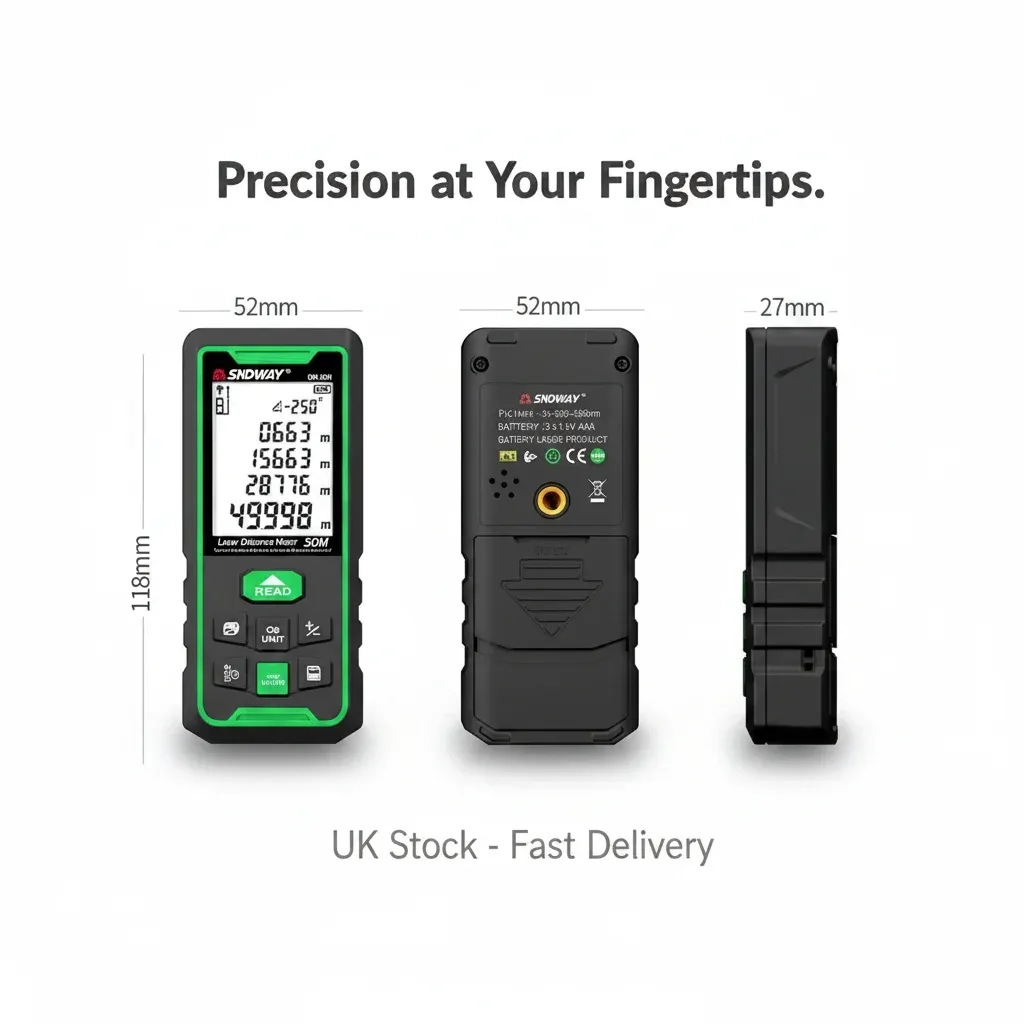
Here is how the most popular laser distance meters available in the UK compare on published specifications as of 2026.
| Model | Range | Accuracy | Charging | Key Feature | Price (approx.) |
|---|---|---|---|---|---|
| CIGMAN 120m | 120m | ±2mm | Type-C fast charge | Backlit LCD, multiple modes | £79.99 direct |
| DeWalt DW03050 | 50m | ±1.5mm | AAA batteries | Bluetooth connectivity | Mid-range, varies by retailer |
| Stanley TLM99 | 30m | ±2mm | AAA batteries | Compact pocket size | Budget, varies by retailer |
| Huepar LM120A | 120m | ±2mm | Li-ion rechargeable | Electronic angle sensor | Similar budget bracket |
| Leica DISTO X310 | 120m | ±1mm | AAA batteries | IP65, tilt sensor | Premium — several times more |
The DeWalt Laser Distance Measurer
DeWalt's offering is solid — you're paying for the brand ecosystem and Bluetooth integration with their construction apps. But mid-range money for only 50m of range is a tough sell when competitors offer 120m for less; loyalty to a matching tool platform is usually the honest reason it wins.
Stanley Laser Distance Measurer
The Stanley TLM99 is decent for light domestic work. Compact, simple interface, reliable enough. But 30m range limits you, and it still runs on AAA batteries in 2026. That feels dated.
Why CIGMAN Stands Out at This Price Point
At £79.99, the CIGMAN 120m unit hits a sweet spot that's hard to argue with. You're getting professional-grade 120m range with ±2mm accuracy, Type-C charging (finally — no more battery runs), and a clear backlit display. Genuinely good value. The Leica gives you ±1mm accuracy and IP65 protection, but at several times the price — worth it for specialist surveyors, overkill for most facilities and trade use. For the full brand-by-brand breakdown, see our best laser measure UK comparison.
Sensor Modules for Arduino & Automation
The other half of the "laser distance sensor" world is component-level: small modules integrated into automated systems, robotics and monitoring — including warehouse applications like automated stock-level sensing. The most common Arduino-compatible modules are:
- VL53L0X — ToF sensor, 2m range, ±3% accuracy, I2C interface, around £4–8
- VL53L1X — upgraded version, 4m range, ±3mm accuracy, £8–12
- TFMini Plus — 12m range, ±1cm accuracy, UART/I2C, £25–35
- TF-Luna — 8m range, compact form factor, £20–30
These wire to common microcontrollers over I2C or UART with freely available libraries. Industrial versions of the same idea turn up in conveyor package dimensioning, CNC positioning and automated parking guidance. If that is your use case, buy a module; for measuring buildings and spaces by hand, a handheld meter is the right form of the same sensor technology.
Professional Applications & Best Practice
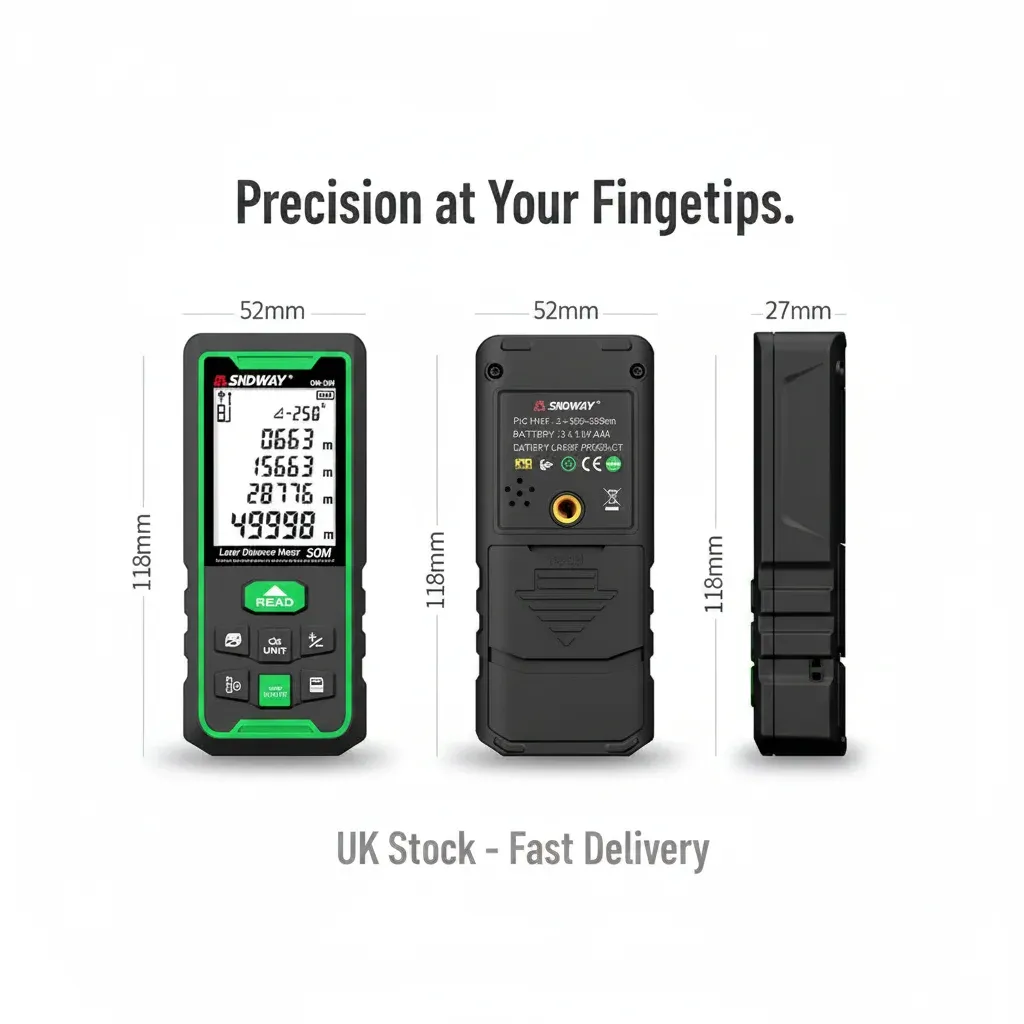
A distance sensor isn't just a fancy tape measure. Used properly, it transforms workflow speed and accuracy across multiple trades.
Facilities & Warehouse Management
This is where long range earns its keep: racking layouts, aisle widths, clear heights under sprinklers, and floor areas for lettings or rates checks. A 120m handheld sensor measures a full bay wall-to-wall in one reading, and area/volume modes turn a walk-round into a space report the same afternoon — one person, no ladders, no borrowed second pair of hands. It needs no specialist training either: point, press, read.
Construction & Surveying
Quantity surveyors use 120m devices for room dimensioning, calculating floor areas, and volume measurements. One reading takes half a second versus a two-person tape run, so a multi-room survey visit shortens noticeably.
Electrical & Plumbing
Cable run calculations, pipe lengths through walls, clearance checks. The Pythagoras function on units like the CIGMAN 120m means you can calculate diagonal distances without climbing ladders — worth the investment for safety alone, since HSE working-at-height guidance treats reducing ladder use as good practice, not just a nice-to-have.
Property & Estate Agency
Professional floor plans and lease particulars require defensible measurements. A laser distance meter with ±2mm accuracy sits comfortably inside the tolerances professional measurement practice expects. Some agents still pace rooms out. Don't be that agent.
Maintenance & Calibration
Keep your laser distance sensor accurate with these habits:
- Check calibration against a known distance monthly
- Clean the laser aperture with a microfibre cloth — dust kills accuracy
- Store between 0°C and 40°C (don't leave it in the van overnight in January)
- Replace or recharge batteries before they're fully depleted — low voltage causes drift
Products sold in the UK should comply with relevant Trading Standards requirements for measuring instruments, particularly if used for trade measurements. Check your device carries appropriate CE/UKCA marking before relying on it for anything official.
Frequently Asked Questions
What is the most accurate laser distance sensor for professional use?
For professional use, devices offering ±1mm to ±2mm accuracy at 120m range represent the standard in 2026. The Leica DISTO X310 achieves ±1mm at a premium price, while the CIGMAN 120m delivers ±2mm accuracy at £79.99 — sufficient for most construction, facilities and survey-support applications.
Can a laser distance measurer work with Arduino?
Yes, dedicated sensor modules like the VL53L0X (short range) and TFMini Plus (up to around 12m) connect directly to Arduino via I2C or UART interfaces with freely available libraries. These modules suit automation, robotics, and industrial monitoring projects; for measuring rooms and buildings by hand, choose a handheld meter instead.
How does a laser distance meter differ from a tape measure for accuracy?
A quality laser distance meter provides ±2mm accuracy consistently across its full range — typically 120 metres. A tape measure introduces human error through sag, misalignment, and parallax, with practical accuracy around ±3–5mm over 5 metres. Over longer distances, tape measure errors compound significantly while laser accuracy remains constant.
Is the DeWalt laser distance measurer worth the premium price?
The DeWalt DW03050 offers 50m range with ±1.5mm accuracy and Bluetooth connectivity, which suits users already in the DeWalt ecosystem. That said, competitors like the CIGMAN 120m offer greater range (120m vs 50m) and Type-C charging at £79.99 — making DeWalt harder to justify on specifications alone.
Do laser distance sensors work outdoors in bright sunlight?
Bright sunlight makes the dot harder to see long before the electronics give up, so effective outdoor range drops significantly. A reflective target plate restores most of it. For the full outdoor technique — target plates, timing and stability — see our 120m laser measure outdoor accuracy guide.
What's the best budget laser distance sensor for UK tradespeople in 2026?
The CIGMAN 120m laser distance meter at £79.99 represents the strongest value for UK buyers in 2026. It combines 120m range, ±2mm accuracy, Type-C fast charging, and a backlit LCD — matching the core specs of established brands while undercutting premium options by a wide margin.
Key Takeaways
- A laser distance sensor delivers ±2mm accuracy over 120m — replacing tape measures for any serious trade or survey work in 2026.
- The CIGMAN 120m unit at £79.99 offers professional-grade performance with Type-C charging, out-ranging DeWalt and Stanley at a comparable or lower price.
- For Arduino and automation, component modules like the VL53L0X and TFMini Plus cover short-range integration jobs — a different tool from a handheld meter, built on the same sensing physics.
- DeWalt's mid-range offering only reaches 50m — fine for the brand-loyal, but hard to justify against 120m alternatives costing less.
- Sunlight limits how far you can see the dot — use a reflective target plate for long outdoor shots and expect the best results under overcast skies.
- Monthly calibration checks against a known distance keep your readings reliable and compliant with professional measurement standards.
- Type-C rechargeable units eliminate battery costs — regular users spend a few pounds a month on disposable cells, so a rechargeable device pays for itself quickly.
Ready to upgrade your accuracy with CIGMAN?
Upgrade Your Toolkit — £79.99